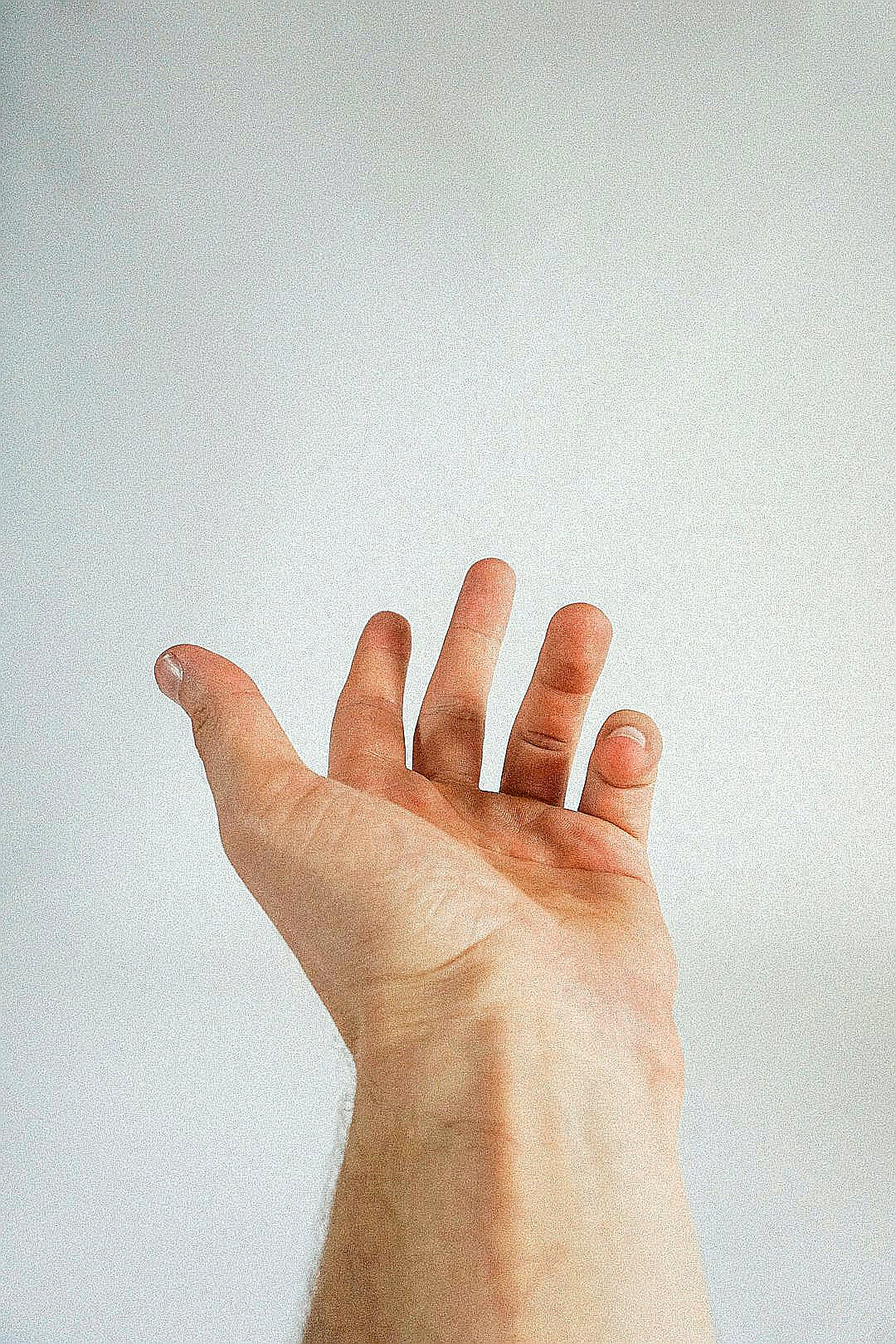
For years, the holy grail of robotics has been the 'anthropomorphic' hand. Engineers have obsessed over replicating human joints, tendons, and five-fingered dexterity. But as any roboticist will tell you, mimicking nature is incredibly complex and often mechanically fragile. Enter the Cartesian Hand: a bold new approach that suggests the secret to dexterity isn't more joints, but simpler ones.
Rethinking the Grip
Developed by the General Robotics Lab, the Cartesian Hand throws out the curved finger joints entirely. Instead, it uses a 7-Degree-of-Freedom (DoF) system based entirely on linear motion. The architecture consists of two vertically stacked, independently actuated parallel grippers. By combining independent grasping with relative manipulation, the hand can shift, rotate, and adjust objects without needing the complex rotational kinematics of a human finger.
Why Linear Matters
Why go linear? The answer is control. In traditional dexterous hands, calculating the exact position of a fingertip requires solving complex trigonometric equations. With a Cartesian system, the mapping is straightforward. This simplification allows the hand to perform intricate in-hand manipulation—like adjusting a tool—with far more precision and less computational overhead. It essentially turns the act of 'fidgeting' with an object into a series of clean, X-Y-Z coordinates.
By stripping away the biological mimicry, the Cartesian Hand proves that we don't need a human-like hand to achieve human-like utility. It's a masterclass in engineering efficiency: solving a complex problem by simplifying the hardware.
Sources
Media