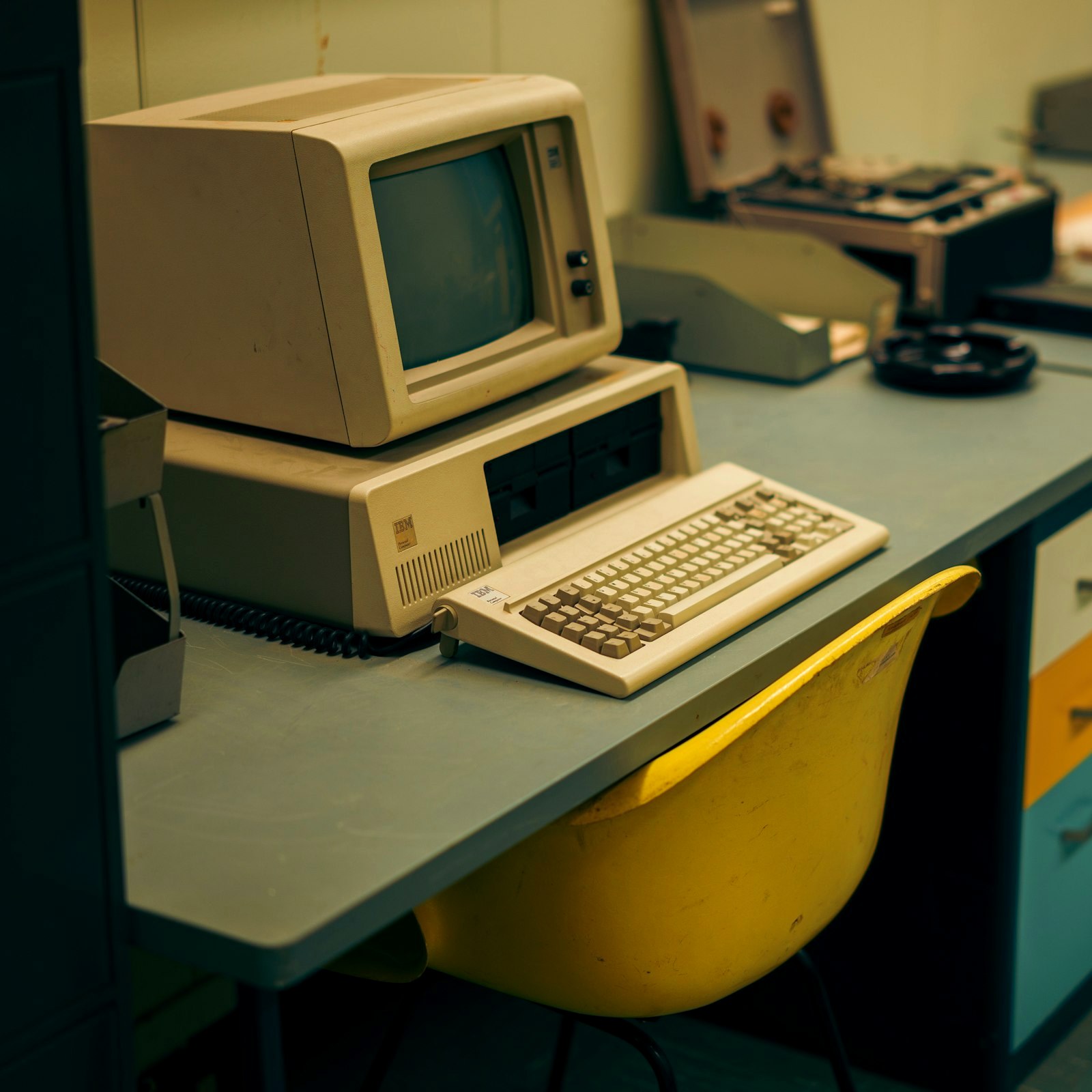
Imagine a world where the cutting edge of 2026 meets the beige plastic of 1981. That is exactly what happens with ClawDOS, a wild experiment that puts a modern AI coding agent on an original IBM PC XT. We aren't talking about an emulator running in a window; we're talking about a real 8088 CPU, 640K of RAM, and a CGA card. It is the ultimate collision of legacy hardware and agentic workflows.
The Magic Under the Hood
ClawDOS isn't running the LLM locally—that would be impossible on a 4.77 MHz chip. Instead, it uses a clever setup involving HARNESS.EXE on FreeDOS and a TLS tunnel via mTCP to communicate directly with the Claude Messages API. This 176 KB program transforms a vintage machine into an active development station, equipped with 18 tools that allow the AI to interact with the system.
Bottlenecks and Benchmarks
You might think the ancient processor would be the limiting factor, but the research shows something more interesting: the CPU isn't the problem. Benchmarks indicate that the time spent replaying context for each turn dominates the process. The 8088 handles the logic just fine; the wait is all in the data exchange.
A Love Letter to Computing
While it might seem like a gimmick, ClawDOS is a testament to the efficiency of early computing and the flexibility of modern APIs. Built using Open Watcom and PicoMEM, it proves that as long as you have a network connection, the 'ancient' hardware of our first computers can still participate in the AI revolution.
Whether this leads to a new era of retro-coding or remains a brilliant piece of digital art, ClawDOS reminds us that the future doesn't always have to replace the past—sometimes, it can just plug into it.
Sources
Media