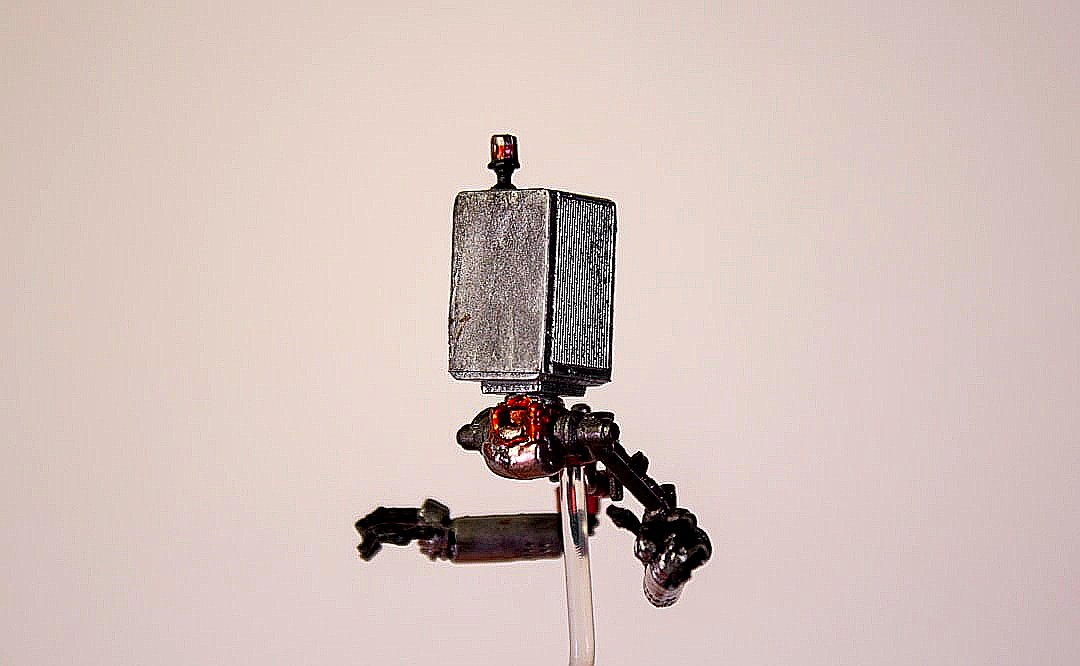
In 1987, British photographer Richard Greenhill set out to build a life-sized humanoid robot capable of carrying luggage. The catch? He had no formal training in robotics and a deep-seated desire to avoid traditional electric motors. The result was the "Shadow Walker," a bipedal marvel that swapped out clunky servos for 28 pneumatic "air-muscles." It wasn't just a DIY experiment; it was a precursor to the modern soft-robotics revolution.
Mimicking the Human Form
Greenhill’s design relied on a version of the McKibben muscle—a technology originally invented in the 1950s. These pneumatic artificial muscles (PAMs) contract and expand when filled with compressed air, mimicking the way human biceps and quads actually function. By using these instead of motors, Greenhill achieved a level of bio-mimicry that was decades ahead of its time. The robot featured a simplified skeletal structure, including a double-axis ankle for better balance and a knee designed without a "complicating kneecap."
From Wood to World-Class Dexterity
What makes the Shadow Walker truly legendary is its legacy. While the robot’s frame was famously made of wood, the underlying technology didn't stay primitive for long. Greenhill’s work with air muscles eventually led to the development of the Shadow Robot Company’s dexterous hands, which are currently among the most advanced in the world.
Working alongside robotics expert David Buckley, Greenhill proved that you don't need a PhD or a massive corporate budget to innovate. The project highlighted how the non-linear behavior of soft materials can create safer, more lifelike interactions compared to the rigid movements of metal-and-motor machines. By building systems that essentially "think" with the same air that powers them, we can drastically reduce the need for bulky electronic interfaces.
The Future is Soft
Today, as researchers look for ways to make robots safer for human interaction, the Shadow Walker’s air-powered philosophy is seeing a massive resurgence. We’re seeing a shift toward systems that move using pressurized air, reducing the weight and complexity of humanoid frames. It turns out that a photographer’s hobby project from the 80s might have held the key to the future of humanoid locomotion all along.
Sources
Media