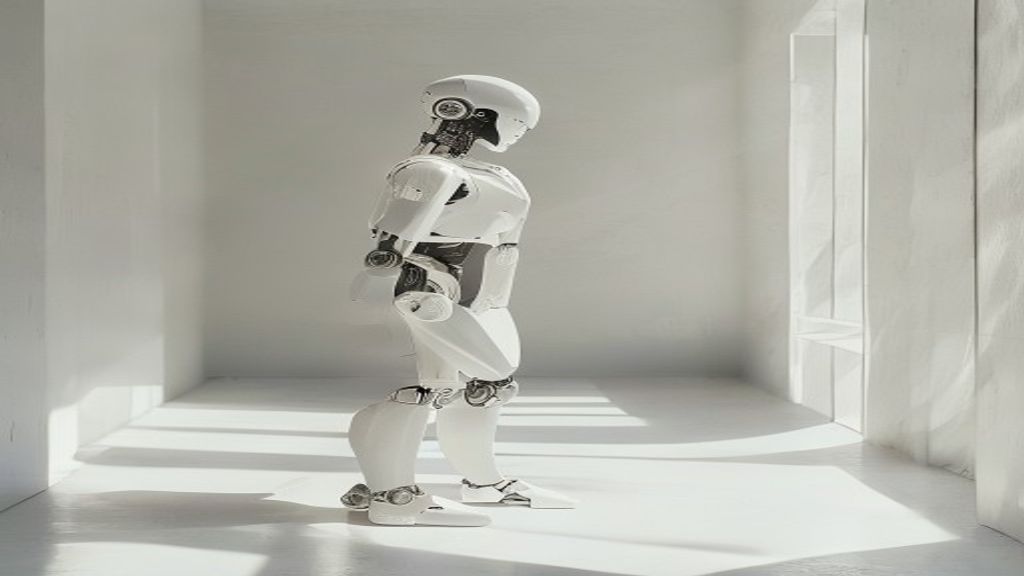
For years, robotics has felt like a collection of specialized tricks. One robot could fold a shirt; another could move a box. But the 'holy grail' has always been a general-purpose machine that can think and move as a cohesive whole. With the unveiling of Gemini Robotics 2, Google DeepMind is moving us significantly closer to that reality.
From Task-Specific to Whole-Body Intelligence
Gemini Robotics 2 isn't just a software update; it's a paradigm shift. While previous iterations focused on specific actions, this new Vision-Language-Action (VLA) model enables "whole-body intelligence." This means the AI can coordinate everything from a humanoid's toes to its fingertips in a single, fluid motion. Instead of treating a robot like a series of independent joints, Gemini 2 treats the entire machine as one integrated system, allowing for far more advanced dexterity and natural movement.
Seeing, Thinking, and Collaborating
What makes this possible is the integration of multiple AI models into one system. A Vision Language Model (VLM) allows the robot to make sense of its surroundings in real-time, while the VLA converts those perceptions into precise motor control.
But it's not just about individual performance. Gemini Robotics 2 also introduces capabilities for multi-robot collaboration. We're seeing a shift where robots can now coordinate with one another in shared spaces, effectively working as a team to complete complex tasks that would be impossible for a single machine.
The Future of Embodied AI
By bridging the gap between high-level reasoning and low-level physical execution, Google is turning robots into truly embodied AI. We are moving away from robots that need rigid programming for every move and toward machines that can understand a command and figure out the physical logistics of how to achieve it on the fly.
Sources
Media