Have you ever wondered why AI models keep getting bigger? In traditional statistics, a model with too many variables usually breaks—it overfits and fails to generalize. But in deep learning, adding billions of parameters actually makes things work better. For years, the leading explanation was the "Lottery Ticket Hypothesis." But a new perspective suggests we might be looking at the wrong map entirely.
The Winning Ticket Myth
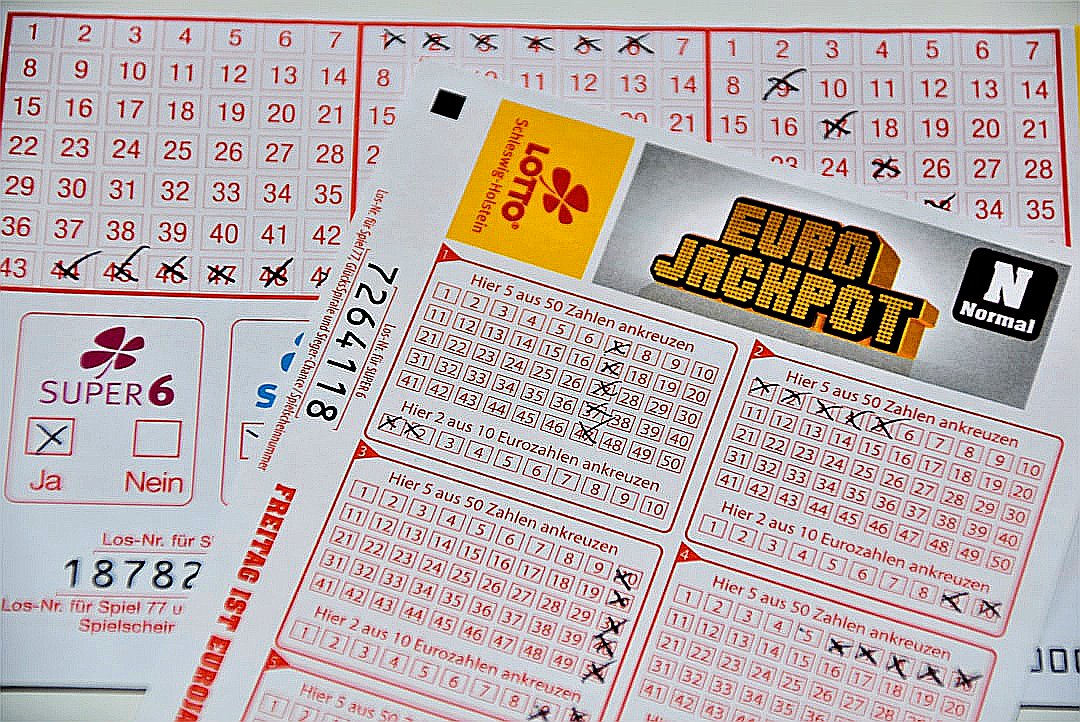
In 2018, researchers proposed that a massive neural network is essentially a giant bucket of lottery tickets. Most of these "tickets" (subnetworks) are losers, but buried inside is a sparse "winning ticket"—a specific set of connections that, if isolated at initialization, could reach the same performance as the full model. Under this view, overparameterization is just a way to increase our odds of hitting the jackpot. If you buy enough tickets, one of them is bound to be a winner.

Enter the Escape Dimensions
While the lottery theory is elegant, new research—including theoretical explorations discussed at EPFL—is offering a different take. Instead of looking for a needle in a haystack, what if the "haystack" itself is the solution? This theory proposes the concept of "Escape Dimensions."
In high-dimensional geometry, as you add more parameters, the optimization landscape changes. In a small network, an optimizer might get stuck in a "valley" (a local minimum) where it can’t improve. But in a model with billions of dimensions, there is almost always an "escape route." These extra dimensions provide paths that allow the optimizer to slide around obstacles that would have trapped a smaller model. Overparameterization isn't about finding a lucky sub-network; it’s about ensuring the path to success is never blocked by the geometry of the space.
A New Map for AI
Whether we are winning lotteries or navigating 175-billion-dimensional escape rooms, one thing is clear: more parameters change the rules of physics for data. If the "Escape Dimension" theory holds, the future of AI efficiency won't just be about pruning models down to find "winning tickets," but about understanding the weird, high-dimensional geometry that makes learning possible in the first place.
Sources
Media