For decades, we've viewed renewable energy and farming as competitors for the same piece of land. It was a zero-sum game: you either grew crops or you harvested electrons. But a new wave of 'agrivoltaics' is flipping the script, turning farmland into a dual-purpose powerhouse using a surprising new tool: magenta-colored solar panels.
Painting the Grid Magenta
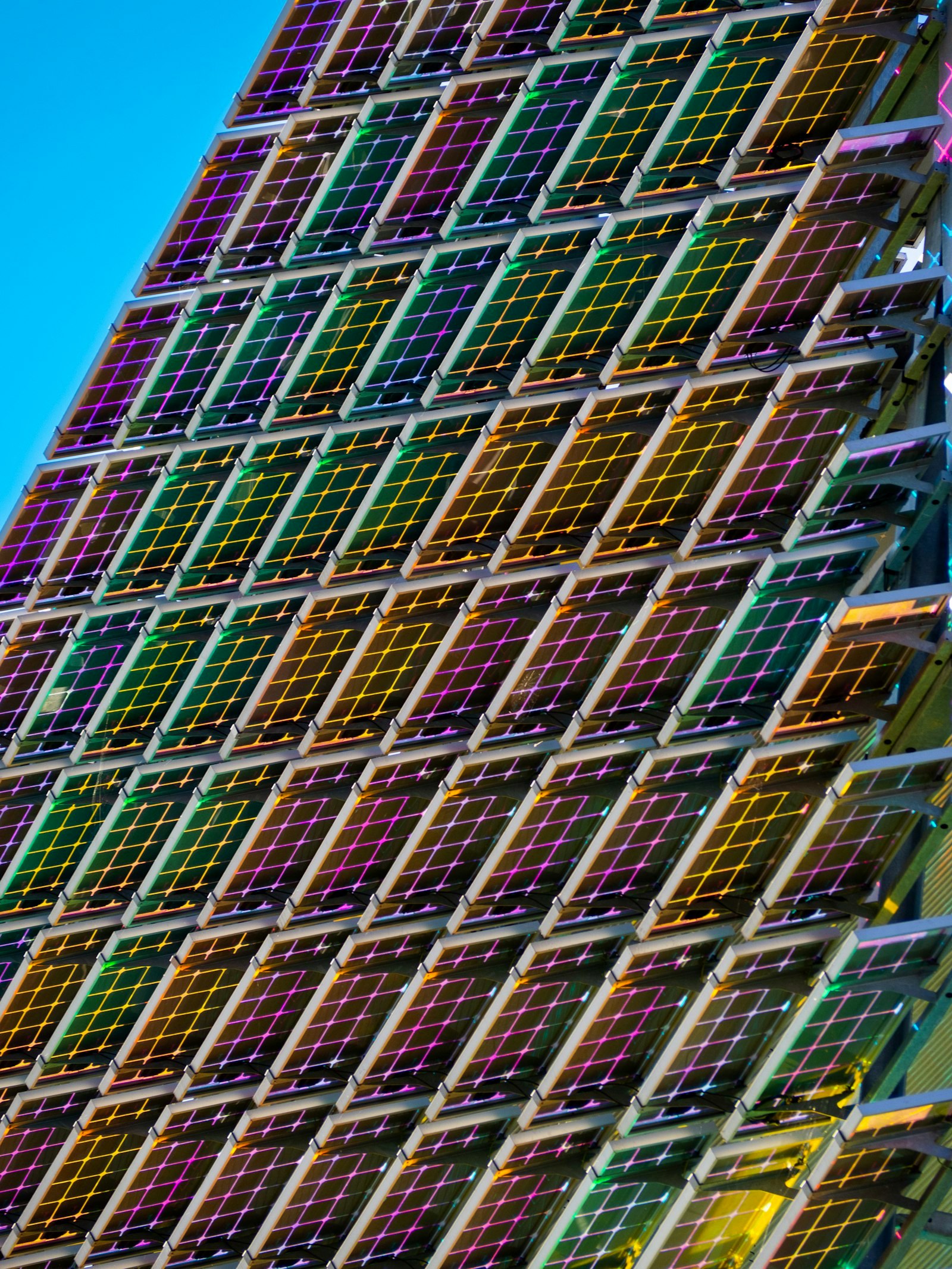
Traditional solar panels are opaque, blocking the very sunlight plants need to survive. Enter semi-transparent cadmium telluride (CdTe) thin-film PV panels. Rather than blocking all light, these specialized modules act as spectral filters.
Recent research from teams in Sweden and Italy has focused on magenta-colored panels. Why magenta? Because these panels are designed to harvest specific wavelengths of light for electricity while allowing the photosynthetic-critical light to pass through to the crops below. In open-field experiments, this setup has been tested with broccoli, aiming to optimize land productivity by balancing energy yield with crop health.
Stackable Power and Global Potential
Beyond just the color, the architecture of these systems is evolving. Engineers are exploring 'solar harvesting' through multiple layers of semi-transparent panels. By stacking these modules, it's possible to capture a broader spectrum of solar light across the same surface area, maximizing electricity generation without completely shading the soil.
This isn't just a niche experiment. Global suitability assessments suggest that this type of wavelength-selective PV technology could be deployed across various climates, guiding farmers on which crops pair best with specific colored filters.
A Greener Horizon
We are moving toward a future where the 'solar farm' is literally a farm. By tuning the light that reaches the ground, we can protect crops from excessive heat and water loss while powering the grid. The magenta glow of these panels might just be the color of a more sustainable food system.
Sources
Media