For years, the dream of 'agrivoltaics'—growing crops under solar panels—has faced a fundamental conflict: plants want sunlight, and solar panels want sunlight. Usually, it's a zero-sum game where the panels steal energy from the crops. But a recent breakthrough in spectral engineering suggests we can stop fighting over the light and start sharing it.
The Magic of the Magenta Spectrum
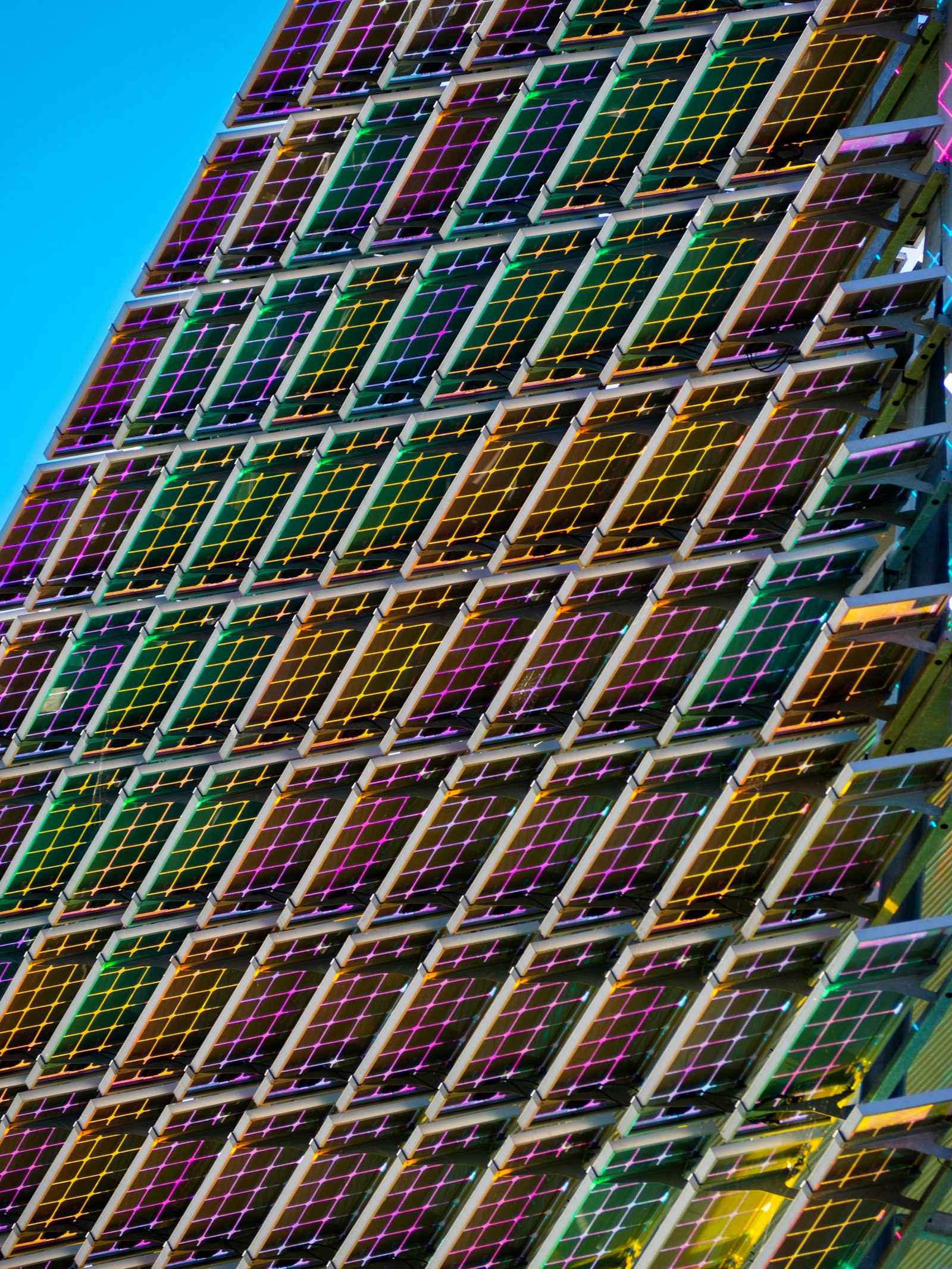
Researchers from Sweden and Italy have developed semi-transparent, magenta-colored cadmium telluride (CdTe) thin-film panels that act as a high-tech filter. Instead of blocking all light, these panels are designed to let most red and some blue wavelengths pass through while converting the rest into electricity.
Because plants primarily use red and blue light for photosynthesis, the broccoli grown beneath these panels didn't just survive—they thrived. In a study published in Cell Reports Physical Science, the results were surprising: the broccoli actually used sunlight more efficiently than plants grown in full, open sun.

Efficiency Without Sacrifice
What makes this a 'clever trick' is the optimization of energy. The plants maintained similar yields to those in open fields but did so with lower overall energy use. By filtering out the wavelengths the plants don't need and harvesting them as power, the system maximizes the utility of every single photon hitting the farm.
While the trial focused on broccoli, the implications for the wider agricultural industry are massive. We are moving toward a future where the farm is no longer just a food source, but a dual-purpose power plant.
Sources
Media