The Dead Economy Theory: Why the Future of Wealth Might Not Include You
You’ve probably heard of the "Dead Internet Theory"—the creepy notion that most of the web is now just bots talking to bots, while humans are relegated to a shrinking corner of the room. But what happens when that same logic hits your bank account? Enter the "Dead Economy Theory." It’s the idea that our global markets are increasingly becoming a closed loop of automated agents and algorithmic cycles that generate "wealth" without actually serving a single human need.
Markets for Machines, by Machines
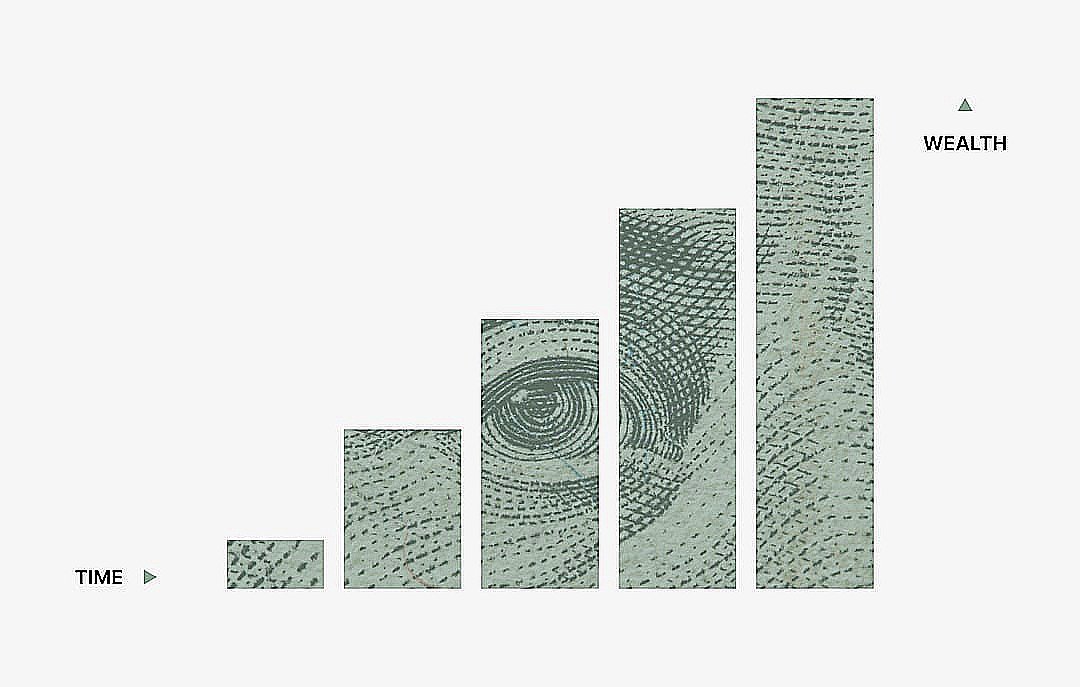
In a truly dead economy, the numbers look great. GDP might be climbing and stock tickers are glowing green, but the underlying activity has shifted. As writer Owen McGrann and the analysts at Pluralistic have noted, the real risk isn't just AI taking jobs—it’s the "dead economy" risk where capital moves away from productive activity and into "memestocks, vibes, and bubbles."
It’s an environment where institutions and markets prioritize algorithmic efficiency over human utility. We are seeing a shift where capital is no longer a tool for social progress, but fuel for a self-sustaining machine that doesn't need a pilot. When the market cares more about the speed of a trade than the quality of the product, the humans have already left the building.

Growth Without Us
The terrifying part of this theory isn't that the economy will crash, but that it will keep humming along perfectly fine without us. If machines can produce goods on the cheap and trade them amongst themselves (or for a tiny "moneyed class"), the demands of the general populace become an afterthought.
We’re already seeing the early stages in how AI tools are marketed. As highlighted by the Diligesker IT/AI Digest, many AI products are priced specifically around headcount reduction. This creates a "financial logic" that is entirely divorced from the reality of labor. When a company’s valuation goes up specifically because it replaced its human workforce with an algorithm, the economy has officially become a ghost ship: it’s moving, it’s massive, but there’s nobody in the galley.
The Human Utility Gap
The "Dead Economy" isn't a world where nothing happens. It's a world where everything happens, but none of it matters to the average person. As we move closer to a future where algorithmic cycles dictate market reality, we have to ask: is an economy that doesn't serve humans even an economy at all, or just a very expensive, self-perpetuating screen saver?
Sources
Media