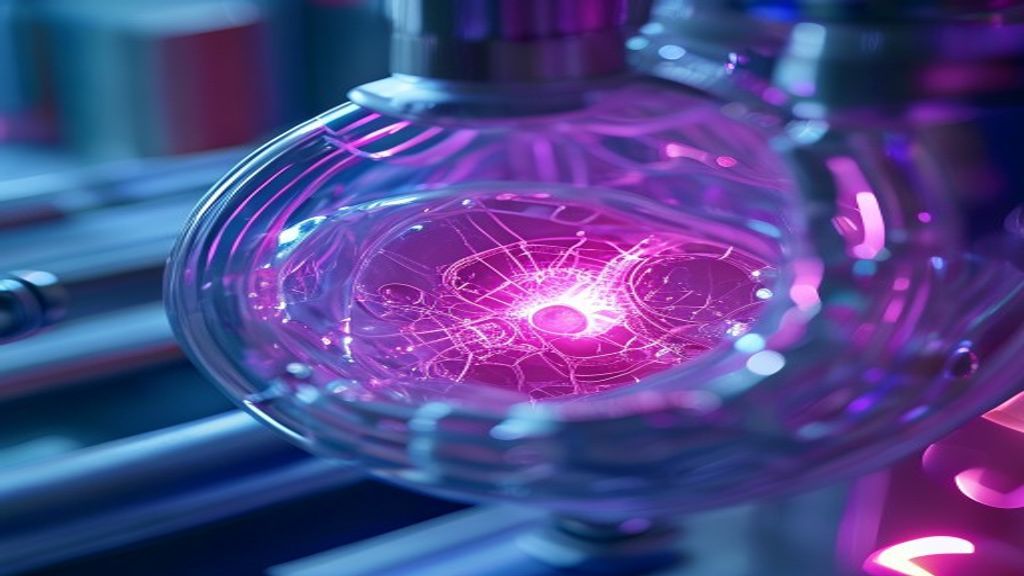
Imagine building a car not from pre-made parts, but by synthesizing the metal, rubber, and glass from raw elements. Now, imagine that car can build its own replacement. That is essentially what scientists have achieved with "SpudCell," a laboratory-assembled organism that has just done something no synthetic creation has ever done before: it completed a full, natural life cycle.
From Chemicals to Life
SpudCell isn't just another lab experiment; it is a "bottom-up" miracle. While previous breakthroughs—like the famous 2010 J. Craig Venter Institute project—focused on creating synthetic genomes to "reboot" existing cells, SpudCell was built from scratch using laboratory chemicals. Starting as digital information on a computer, its genetic code was translated into physical DNA using four bottles of chemicals and then housed in a synthetic structure.
Unlike its predecessors, which often required researchers to add genes back in just to prevent them from dividing into abnormal, lumpy shapes, SpudCell is a master of its own biology. It marks the first time a completely synthetic entity has demonstrated the full cycle of growth, genetic replication, and division into a second generation of healthy cells.
Mastering the Biological Rhythm
To reach this milestone, SpudCell had to conquer the cell cycle—the complex series of events where a cell prepares for and executes division. This includes the critical G1 phase, where the cell monitors its environment and grows. Interestingly, research into these cycles shows that a cell's resistance to external stress often correlates with the level of sulfhydryl compounds within it. By mimicking these natural rhythms, SpudCell proves it is more than just a "beautiful blob"; it is a functional biological machine.
This breakthrough moves us closer to a controversial but exciting reality: the creation of living beings with capacities that never evolved in nature. Scientists are now "off to the races," using these minimal organisms to uncover the fundamental rules of life itself.
A New Era for Biotech
We are officially entering the era of Life 2.0. By proving that we can assemble a cell that grows and divides autonomously, researchers have opened the door to bespoke biology. In the future, we might see synthetic cells designed specifically to manufacture life-saving drugs or clean up environmental disasters, all while following the same cycle of life that has governed earth for billions of years.
Sources
Media