We’ve all grown accustomed to the way modern AI creates images. Models like Stable Diffusion or Midjourney work by slowly removing "noise" from a canvas until a clear picture emerges. It’s effective, but it’s computationally heavy. Now, a novel approach called Un-0 is looking to the world of classical physics to find a more elegant solution. Instead of denoising, it uses the rhythmic dance of coupled oscillators to synthesize visuals.
The Physics of the "Dance"
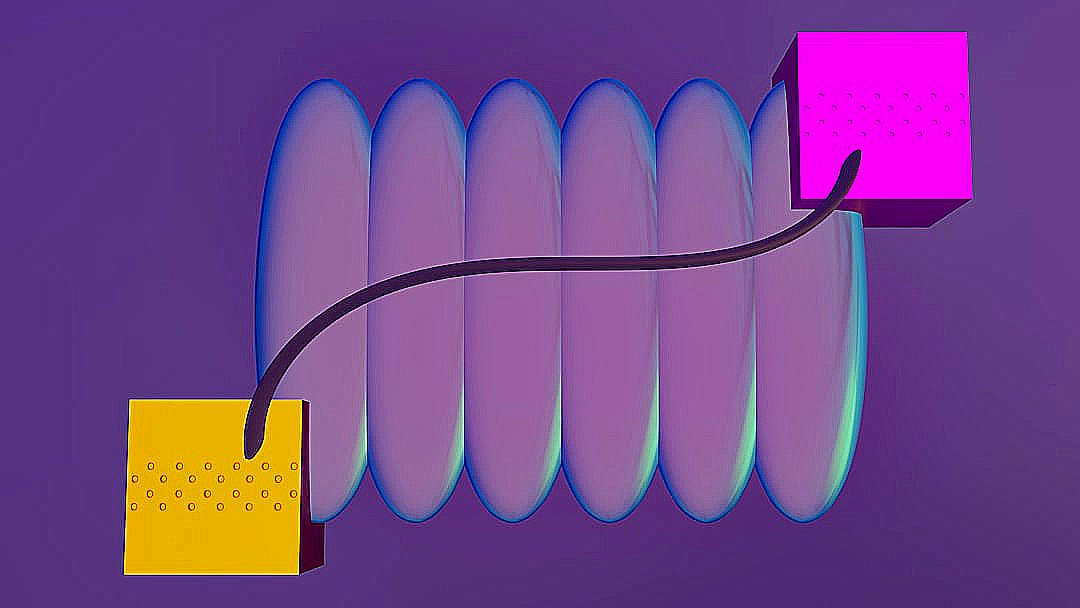
In a physics lab, coupled oscillators are often demonstrated as a series of masses connected by springs. When one moves, it influences the others. As noted in Harvard’s physics lectures, when you have a large enough number of these oscillators working together, their collective motion begins to look like waves.
Un-0 applies this principle to generative modeling. By treating pixels or latent features as a network of vibrating nodes, the system can reach a state of "synchronization" that represents a completed image. It’s a mathematical alternative to mainstream architectures that feels less like a calculator and more like a vibrating string instrument.
Chimeric Synchronization and Efficiency
One of the most exciting aspects of this research involves "chimeric synchronization." This occurs when a network of identical oscillators splits into two groups: one that is synchronized and orderly, and another that remains incoherent or chaotic. Research into VO2-oscillator circuits suggests that this balance is key to creating efficient neural network information converters.
By leveraging these physics-inspired states, Un-0 could potentially generate images with less power and fewer iterations than traditional diffusion models. While current tools like GPT Image 2 are pushing the boundaries of what text-to-image can do for the average user, the underlying math of Un-0 suggests a future where AI art is composed through the natural laws of resonance and wave patterns.
A New Wave of Creativity
We are still in the early days of seeing physics-based models like Un-0 compete with the billion-dollar diffusion giants. However, the move toward coupled oscillators represents a fascinating shift. If this approach scales, the next generation of AI generators won't just be "predicting" what a cat looks like—they'll be vibrating it into existence through a digital symphony of synchronized waves. It’s a harmonic convergence of art and classical mechanics that could redefine the efficiency of the entire industry.
Sources
Media